A Guide to Pro Rata Share in Aviation
A pro rata share in aviation is a legal cost-splitting arrangement where private pilots divide direct flight expenses equally among all onboard occupants.
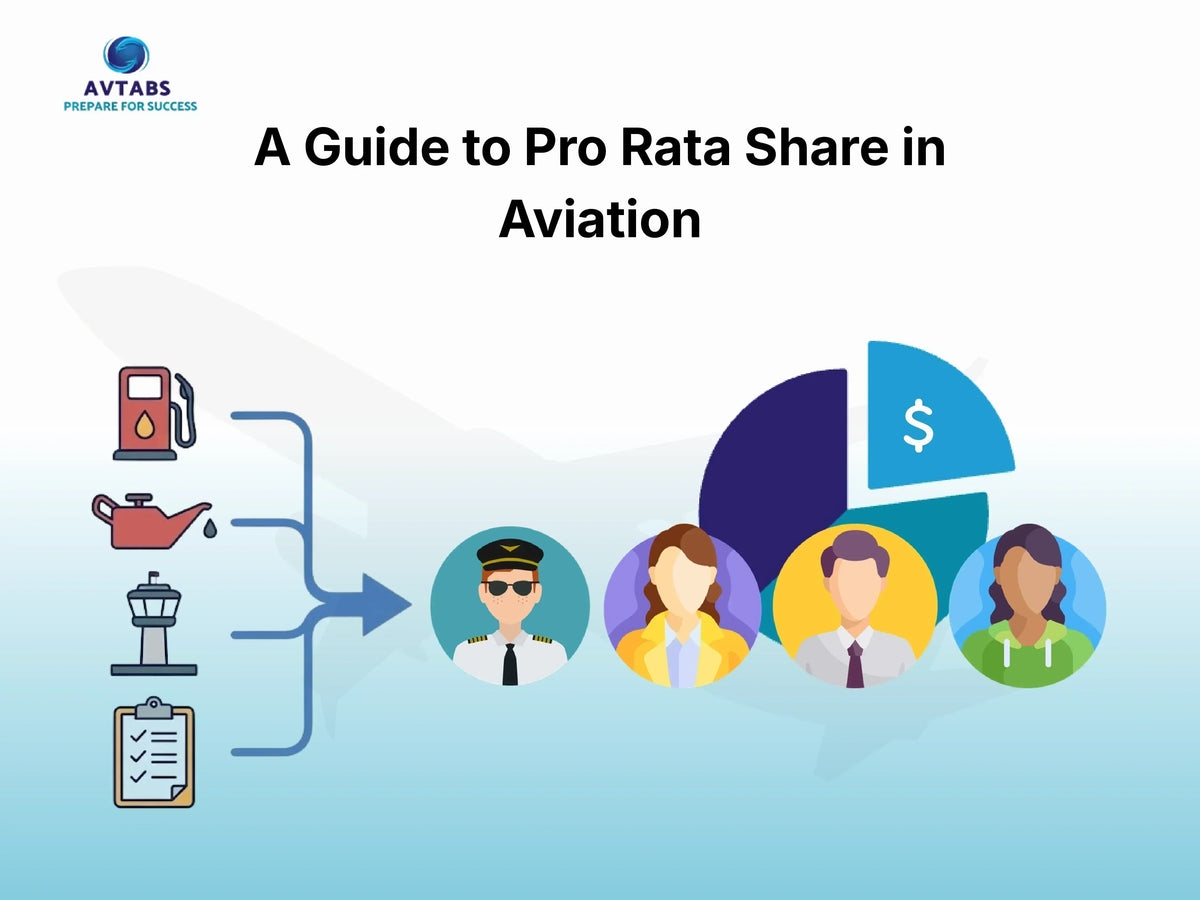
Pro rata share in aviation is the proportional division of allowable flight expenses among the pilot and passengers, ensuring the pilot pays their own share. Core FAA requirements include compliance with 14 CFR § 61.113(c), consulting guidance documents, paying minimum costs, prohibiting profit or compensation, maintaining a bona fide common purpose, and avoiding holding out.
Calculating pro rata involves five steps: identifying total costs, determining total units, assigning individual units, calculating percentages, and applying those percentages to find each occupant's share. Real-flight scenarios, such as equal splits, unequal leg splits, canceled passengers, and illegal charters, illustrate proper versus non-compliant arrangements.
Under the pro rata share, allowable expenses include fuel, oil, airport and landing fees, navigation fees, and aircraft rental, while maintenance, insurance, depreciation, profit, and pilot labor cannot be shared. Compliance prevents FAA enforcement, certificate action, voided insurance, and legal liability, and a quick checklist with Pre-Tabbed FAR/AIM ensures safe, legal cost-sharing.
What is Pro Rata Share in Aviation?
Pro rata share in aviation means that the pilot and passengers equally share the direct operating expenses of a flight, such as fuel, oil, airport fees, and aircraft rental, with no profit to the pilot, as defined in Advisory Circular AC No. 61-142. Under this rule, each passenger and the pilot must pay a proportional share of the allowable flight expenses, and the pilot cannot receive compensation beyond these shared costs. For example, if total flight expenses are $280 and the flight includes one pilot and three passengers, the cost is divided equally, meaning each person pays $70. This cost-sharing rule allows private pilots to reduce flight expenses while ensuring the flight remains a non-commercial operation that complies with FAA private pilot regulations.
What Are the Core FAA Requirements for Pro Rata Share?
Core FAA Requirements for Pro Rata Share include Core Regulation 14 CFR § 61.113(c), documents to consider for expense verification, pilot's minimum payment requirement i, no profit or compensation, and a common purpose exists between pilot and passengers. These requirements collectively define the legal boundary of flight cost sharing, ensuring that a private pilot operates within regulatory limits while sharing only allowable expenses with passengers.
Core Regulation - 14 CFR § 61.113(c)
14 CFR § 61.113(c) establishes a limited cost-sharing exception that permits a private pilot to accept passenger contributions only toward direct operating expenses such as fuel, oil, and airport fees. This provision acts as a narrow carve-out from the general prohibition against flying for compensation or hire. A private pilot may act as pilot in command of a charitable, nonprofit, or community event flight described in § 91.146 if the sponsor and pilot comply with the requirements of § 91.146. To remain compliant, the pilot must pay at least their equal pro rata share of the total flight costs, ensuring no financial benefit is received. The regulation also requires a bona fide common purpose between the pilot and passengers, and strictly prohibits holding out, meaning the pilot cannot advertise or offer air transportation to the public.
Documents to Consider
Pilots must consult additional FAA guidance documents that interpret and clarify how pro rata share rules apply in real-world scenarios. Key resources include FAA Legal Interpretations, such as Haberkorn and Mangiamele, which explain how concepts like common purpose and compensation are evaluated in practice; Advisory Circulars that provide official explanatory guidance; and educational materials from organizations like the Aircraft Owners and Pilots Association. These documents matter because the regulation itself is concise and does not address every scenario, while legal interpretations establish precedent and define how the FAA applies rules during enforcement and compliance reviews.
Pilot's Minimum Payment Requirement
A private pilot must pay at least their proportional pro rata share of the total allowable flight costs and cannot allow passengers to cover their portion, as this would constitute prohibited compensation under 14 CFR § 61.113(c). For example, if three occupants are on board, including the pilot, the total flight cost must be divided equally among them, and the pilot must pay at least one-third of the total. This rule ensures that the pilot maintains a personal financial contribution and prevents any arrangement where passengers effectively pay for the pilot's flight, which would be treated as disguised compensation or hire.
No Profit / No Compensation
The no-profit or compensation rule exists to ensure that a private pilot does not operate a flight as a commercial service or receive any benefit beyond cost-sharing under 14 CFR § 61.113(c). The FAA defines compensation broadly to include not only direct monetary gain but also indirect or non-monetary benefits, such as logging flight hours for career advancement or receiving anything of value in exchange for transporting passengers, as clarified in FAA Legal Interpretations like Mangiamele and Haberkorn. Even collecting a single dollar more than the pilot's proportional share of flight costs can constitute illegal compensation, which would violate private pilot privileges.
Common Purpose
Under the core FAA requirements for pro rata share, a private pilot must ensure that the flight is based on a bona fide shared purpose between the pilot and passengers, not merely the transportation of passengers. A compliant scenario exists when both the pilot and the passengers independently plan to travel to the same destination for a common purpose, such as attending an event together. Consider a situation where a pilot adjusts or schedules a flight primarily to accommodate passengers while claiming they were "going anyway." This scenario lacks a genuine common purpose and leads to non-compliance with cost-sharing regulations.
No Holding Out
Holding out refers to advertising or representing the availability of air transportation to the public, which is not permitted under core FAA requirements for pro rata share. This includes not only formal advertisements but also informal actions, such as posting flight offers on social media, online forums, or in group chats, that reach a broad or undefined audience. A compliant situation involves a pilot asking a known friend to split costs for a shared trip, while promoting or offering available seats to the public constitutes an unauthorized operation and violates cost-sharing limitations.
How Do You Calculate Pro Rata Share Step by Step?
Pro rata share is calculated by identifying the total allowable flight cost, determining the total number of occupants, assigning individual units, calculating each person's proportional share, and applying that ratio to find the final amount each occupant must pay. This method ensures that each occupant, including the pilot, contributes a fair and proportional share in compliance with cost-sharing requirements.
5 steps to calculate Pro Rata Share are:
Step 1: Identify the Total Amount
The total amount includes only allowable, documented operating expenses for that specific flight, such as fuel, oil, airport fees, and aircraft rental, which must be accurately recorded using receipts or logs. Including non-allowable costs, such as maintenance or insurance, can render the pro rata share arrangement non-compliant with FAA rules.
Formula: Total Amount = Sum of Allowable, Documented Expenses
Example:Fuel ($200) + Airport Fees ($100) + Oil ($50) = $350 Total
Step 2: Determine Total Units
Total units represent the total number of occupants on the flight, including the pilot. Counting the pilot ensures that they pay their proportional share and that costs are fairly distributed among all participants.
Formula:Total Units = Number of Passengers + 1 Pilot
Example:3 Passengers + 1 Pilot = 4 Total Units
Step 3: Determine Individual Units
In this step, individual units are assigned to each occupant based on how the flight costs are divided. In a simple split, each person, including the pilot, is assigned 1 unit, while in more complex cases, such as multi-leg flights, units may be adjusted based on the portion of the flight each passenger occupies.
Formula: Individual Units = 1 per Person
Example: Each person (including pilot) = 1 Unit
Step 4: Calculate the Percentage/Ratio
Divide each unit by the total number of units to find each person's percentage of the total cost.
Formula: Individual Percentage = Individual Units ÷ Total Units
Example:1 ÷ 4 = 0.25 (25%) per person
Step 5: Calculate the Pro Rata Amount
A pro rata share is the portion of the total cost each individual pays based on their share of units in the group.
Formula: Pro Rata Amount = (Individual Units ÷ Total Units) × Total Amount
Example: If the total cost is $400 and there are 4 units (including the pilot), then:
(1 ÷ 4) × $400 = $100 per person
What Does a Pro Rata Share Calculation Look Like in a Real Flight Scenario?
A pro rata share calculation involves applying cost division methods such as a simple equal split, unequal leg split, canceled passenger adjustment, and identifying illegal charter situations. The total allowable operating expenses are then proportionately divided between the pilot and passengers, in compliance with FAA cost-sharing rules.
- Simple Equal Split
In the simplest scenario, one pilot and two passengers fly to a single destination with equal legs. If the total allowable expenses for the flight (including fuel, oil, and airport fees) are $300, the total number of units is 3, with each person, including the pilot, counted as 1 unit. Each occupant's proportional share is 1 ÷ 3 = 33.33%, resulting in a pro rata amount of $100 per person. The pilot pays their $100 share, and each passenger pays $100, confirming compliance with FAA cost-sharing rules.
- Unequal Leg Split
In a multi-leg flight, a passenger joining for only one leg pays a prorated share based on distance, time, or another fair metric, contributing only to the portion of the flight they occupy. For example, if a two-leg flight costs $400 total with 2 passengers and 1 pilot (3 total units), and one passenger only participates in the first leg, which accounts for 60% of the distance, their share would be calculated on that portion, resulting in $240 for that leg based on proportional cost distribution. This ensures that partial-trip passengers pay only for the part of the flight they use, maintaining compliance with pro rata share rules.
- Canceled Passenger
If a passenger cancels the booking, the total cost remains the same, but it is split among fewer people, so each remaining person pays a higher share. Under pro rata share rules, the pilot generally cannot collect payment from the no-show passenger, as cost-sharing applies only to those who actually participate in the flight. This ensures compliance by preventing pilots from recovering expenses from absent passengers and maintaining the proportional fairness of the arrangement.
- Illegal Charter
An illegal charter occurs when a flight appears to follow pro rata rules, but the pilot avoids their proportional share or collects extra money. For example, if 3 passengers each pay $100 for fuel while the pilot pays nothing or adds a separate "fee," the arrangement becomes a compensated carriage. Such scenarios violate FAA regulations and serve as cautionary examples, emphasizing that pilots must always pay their share to remain compliant.
What Costs Can and Cannot Be Shared Under the Pro Rata Share?
Under the pro rata share, allowable flight expenses can be shared proportionally among the pilot and passengers, including fuel and oil specific to the flight, airport and landing fees, navigation and overflight fees, and aircraft rental charges. In contrast, non-allowable costs must be excluded to remain compliant with FAA regulations, including aircraft maintenance and repairs, insurance premiums, depreciation or ownership-related costs, any form of profit or compensation for the pilot, and the pilot's personal time or labor. This distinction ensures that cost-sharing remains strictly expense-based and prevents any unauthorized commercial operations.
What Expenses Can Be Shared Among Occupants?
Expenses that can be shared among occupants under a pro rata share include fuel and oil costs, airport and landing fees, navigation and overflight fees, and aircraft rental fees. Sharing only these allowable expenses ensures compliance with FAA regulations and maintains the legality of the cost-sharing arrangement.
- Fuel and Oil Costs
Fuel and oil costs can be shared among occupants, as they are the most straightforward allowable expenses under a pro rata share. These costs must be documented accurately using receipts or fuel logs, and only the actual expenses incurred for that specific flight can be included; estimated or average costs are not permitted. Proper documentation ensures compliance with FAA regulations and provides a verifiable record for inspections or reviews.
- Airport and Landing Fees
Under a pro rata share, occupants can divide airport and landing fees, which include landing, ramp, and tie-down charges incurred specifically during the shared flight. Fees unrelated to the flight, such as storage or charges at the pilot's home airport, are excluded. Properly documenting these fees with receipts ensures FAA compliance and transparency among all occupants.
- Navigation and Overflight Fees
Occupants can share navigation and overflight fees on a pro rata basis, including charges such as Eurocontrol, oceanic, and other direct navigation costs that cover the use of controlled airspace and air traffic services. Only documented, flight-specific expenses can be shared, ensuring compliance and a fair distribution of costs among all occupants.
- Aircraft Rental Fees
Aircraft rental fees can be shared as expenses under a pro rata share when the pilot rents the aircraft rather than owns it. The rental cost, based on Hobbs or tach time for the shared flight, must be divided proportionally, with the pilot paying their share. Passengers cannot cover the pilot's portion or the entire rental cost, as this would violate FAA cost-sharing rules.
What Expenses Cannot Be Included in a Pro Rata Share Arrangement?
Expenses that cannot be included in a pro rata share arrangement include maintenance, insurance, depreciation, any form of profit or compensation, and the pilot's personal time or labor. Excluding these non-allowable expenses ensures the cost-sharing arrangement remains legal and that the pilot does not receive unintended financial or non-monetary benefits.
- Aircraft Maintenance
Aircraft Maintenance cannot be included in a pro rata share arrangement because it is considered an ownership cost rather than a per-flight operational expense. Including maintenance, even if performed specifically for a trip, effectively turns the arrangement into a form of compensation, which is prohibited under FAA interpretations. To remain compliant, only direct, flight-specific expenses may be shared among the pilot and passengers.
- Aviation Insurance
In a pro rata share, Aviation insurance cannot be included because it is an ownership or fixed cost rather than a direct, flight-specific expense. FAA guidance flags the inclusion of insurance premiums in shared costs as impermissible, and this is a common mistake made by aircraft owners attempting to allocate costs among passengers.
- Depreciation of Aircraft
Depreciation of aircraft refers to the gradual reduction in the aircraft's value over time due to usage, age, and wear. For example, if an aircraft is purchased for $200,000 and its value decreases to $150,000 after a few years, the $50,000 loss represents depreciation. Since it is not a direct flight-specific cost, including it would provide the pilot with an indirect financial benefit, while FAA rules allow only actual out-of-pocket expenses related to the flight to be shared.
- Profit or Compensation
In pro rata share, the no-profit rule means the pilot cannot receive any amount above their actual proportional share of allowable flight costs, as doing so constitutes illegal compensation. This includes both monetary and non-monetary benefits, such as accumulating logbook hours or gaining career advantages, which are considered gray areas. Strict adherence keeps the cost-sharing arrangement legal and compliant with FAA regulations.
- Pilot's Personal Time or Labor
Pilot personal time or labor cannot be assigned a dollar value or added to shared costs, as doing so would constitute compensation for services rendered and violate FAA pro rata share regulations. This maintains the arrangement as strictly cost-sharing, while noting that flight instructors may bill for instructional time under separate rules. Proper adherence maintains transparency and prevents potential regulatory violations.
Why Does Pro Rata Share Compliance Matter for Every Pilot?
Pro rata share compliance matters for every pilot because failure to follow FAA rules can lead to certificate action, voided insurance, and legal liability. Following proper procedures and ensuring all allowable costs are correctly documented helps pilots avoid these consequences and maintain safe, legal cost-sharing arrangements.
- Consequences of non-compliance
Failure to comply with pro rata share rules can result in serious consequences for pilots, including FAA enforcement actions, civil penalties, and potential suspension or revocation of their certificate. Operating as an uncompensated air carrier is taken seriously regardless of intent, meaning even unintentional violations can result in penalties. Strict adherence to cost-sharing rules is essential to keep all flight operations legal and FAA-compliant.
- Certificate action, voided insurance, legal liability
Non-compliance with pro rata share rules can expose pilots to major risks, including FAA certificate action under 49 U.S.C. § 44709, which allows suspension or revocation. Voided insurance and legal liability arise because most GA policies exclude compensated operations, leaving the pilot and aircraft owner without coverage and personally liable in case of an accident.
- Quick compliance checklist
Pro rata share compliance matters because failure to follow FAA rules can lead to certificate action, voided insurance, and legal liability. To prevent these risks, pilots should confirm a bona fide common purpose, pay their proportional share, include only allowable costs, and avoid holding out. Referencing the Pre-Tabbed FAR/AIM ensures the regulations are applied correctly, making this checklist a practical guide for safe, legal cost-sharing flights.